-
Caregivers and Parents of Neurodivergent Kids
Folks who immigration is apart of their story
Teens and Young Adults Exploring Identity and Belonging
Individuals Building Self-Understanding and Self-Compassion
Individuals Exploring Who They Are and Where They Belong
People interested in Decolonizing their mental health
-
Education:
University of Toronto Masters of Social Work - Indigenous Trauma and Resilience, 2026
University of Calgary- Bachelor of Community Rehabilitation and Disability Studies, 2018
Smaller Trainings:
San'yas Indigenous Cultural Safety Traning- Provincial Health Services Authority.
-
Relational Therapy
Attachment Based Therapy
Narrative Therapy
Neurodivergence Affirming Practice
Expressive and Creative Therapies
Strengths Based
Client Centered Counselling
Trauma Informed Support
Emotion Focused Work
Somatic Aware Practices
-
165 per session. Camila Primarily works on Tuesdays.
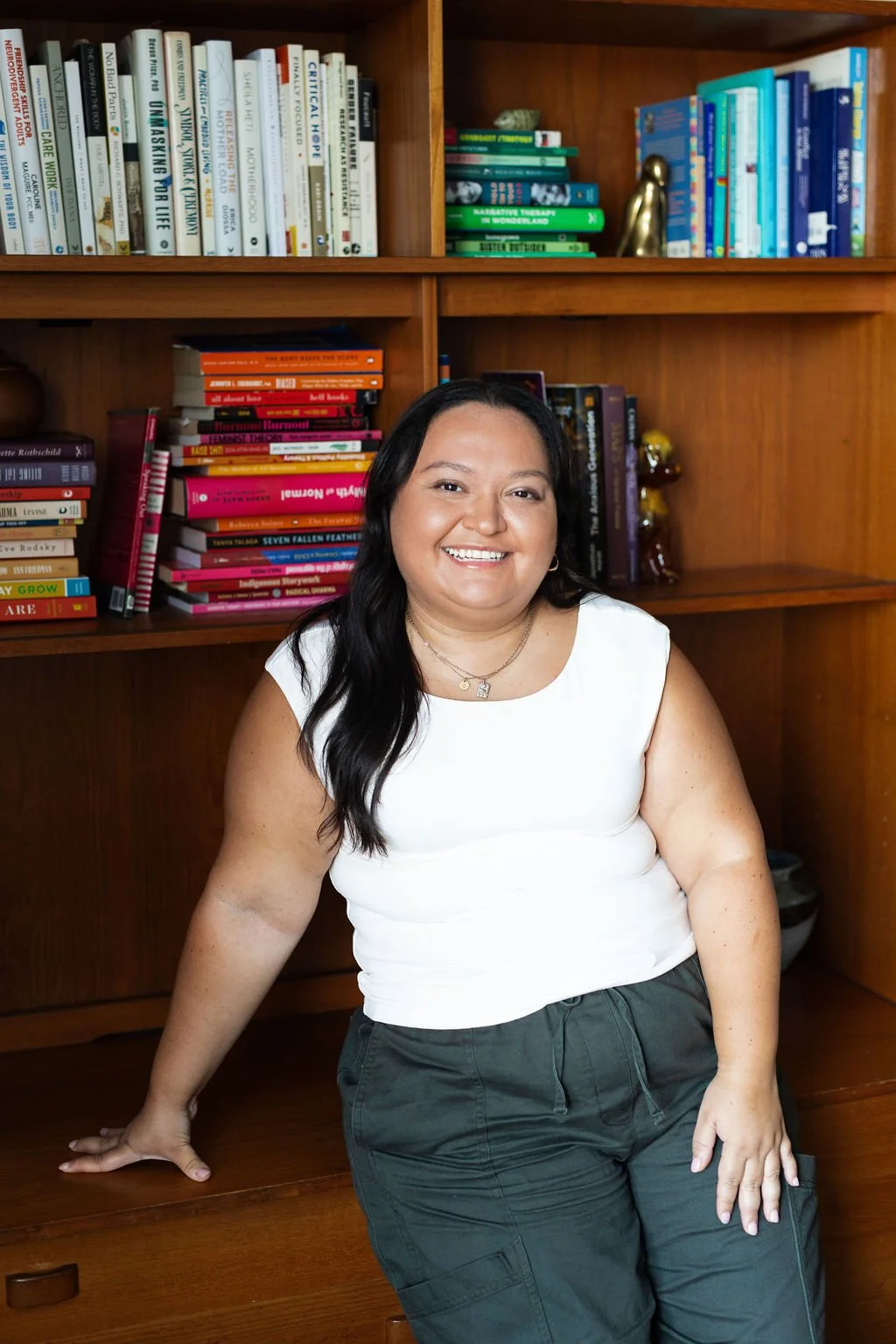
Camila (She/her/ella) works from a relational lens that honours the intersections of race, Indigeneity, gender, sexuality, disability, spirituality, and socioeconomic realities on the unceded territories of the xʷməθkʷəy̓əm (Musqueam), Sḵwx̱wú7mesh (Squamish), Stó:lō (Stolo), and səlilwətaɬ (Tsleil-Waututh) peoples.
She believes that identity, culture, family expectations, and lived experiences shape how people move through the world, and she welcomes all parts of who her clients are, including their resilience, questions, grief, and hopes.
Camila is a Latinx, cisgender woman and a settler to Canada. Growing up in an immigrant family gave her a deep appreciation for the cultural values, responsibilities, and complexities that come with navigating multiple worlds. These experiences continue to shape the way she shows up as a therapist, bringing curiosity, humility, and respect to each person's unique story.
Camila understands that many people carry the quiet pressure of being dependable, staying grounded, and caring for everyone else, often at the expense of themselves. She strives to create a therapeutic space where clients do not have to be the strong one. It is a space where they can speak openly, explore what has been weighing on their mind and body, and reconnect with themselves.
Her approach is relational and grounded in trauma informed practice, supporting clients in reconnecting with their inner wisdom and making sense of the patterns that have shaped their lives. Whether someone is navigating anxiety, burnout, trauma, loss, or feeling stuck, Camila works at a pace that feels right for them, building on the strengths and resources they already possess.
Camila's hope is that therapy becomes a place where clients feel seen, understood, and accepted. She believes that a person's worth is not measured by how much they do or how much they carry. Rest, care, and healing are not rewards to be earned. They are part of what every person deserves simply because they are human.
Outside of the therapy room, Camila enjoys discovering local festivals, unapologetically cheering for contestants on competitive reality television, and convincing herself that one more luxurious spa product is absolutely essential. She believes moments of joy, laughter, and a little indulgence can be meaningful forms of self care too.